


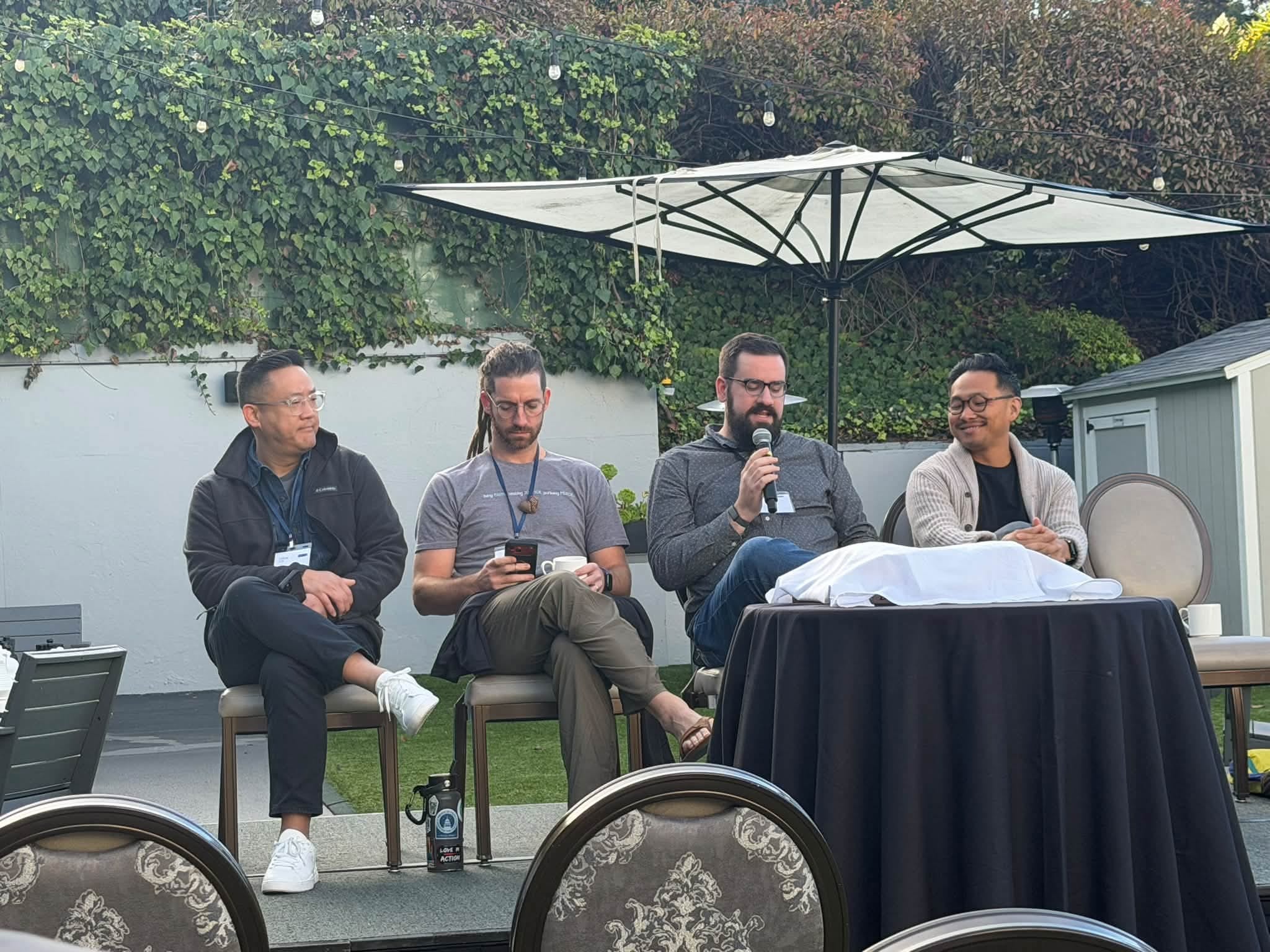
A couple of weeks ago, I was in San Francisco with the Phygital Fellows. It was a whirlwind of intensive learning in less than 60 hours. I wanted to take a moment here on Pixel & Pulpit to highlight some of the work I got to do there.
What Even Is the Phygital Fellows?
The Phygital (physical+digital) Fellows gathering culminated two years of work the Phygital Fellows did through Wesley Impact Partners, the Texas Methodist Foundation, and a Lilly Endowment grant.
Nearly two dozen of us who are doing the blending of physical and digital church work gathered together to explore the boundaries of those things. We learned from people across the spectrum — from Silicon Valley folks to Howard Thurman scholars, from theologians to enthusiasts, to each other.
We went from Atlanta to San Francisco to Boston to Chicago, working on projects in between gatherings. My own personal project was the Pixel Pilgrimage, a concept I’ve talked about in some places here on Pixel & Pulpit heretofore. (It Works. Now What?)
After the course of two years, we were given the opportunity to meet in San Francisco again. This time, we could invite three people apiece — to show the work we’ve done and to welcome more people into the fold of what we’re doing.
The Digital-First Room
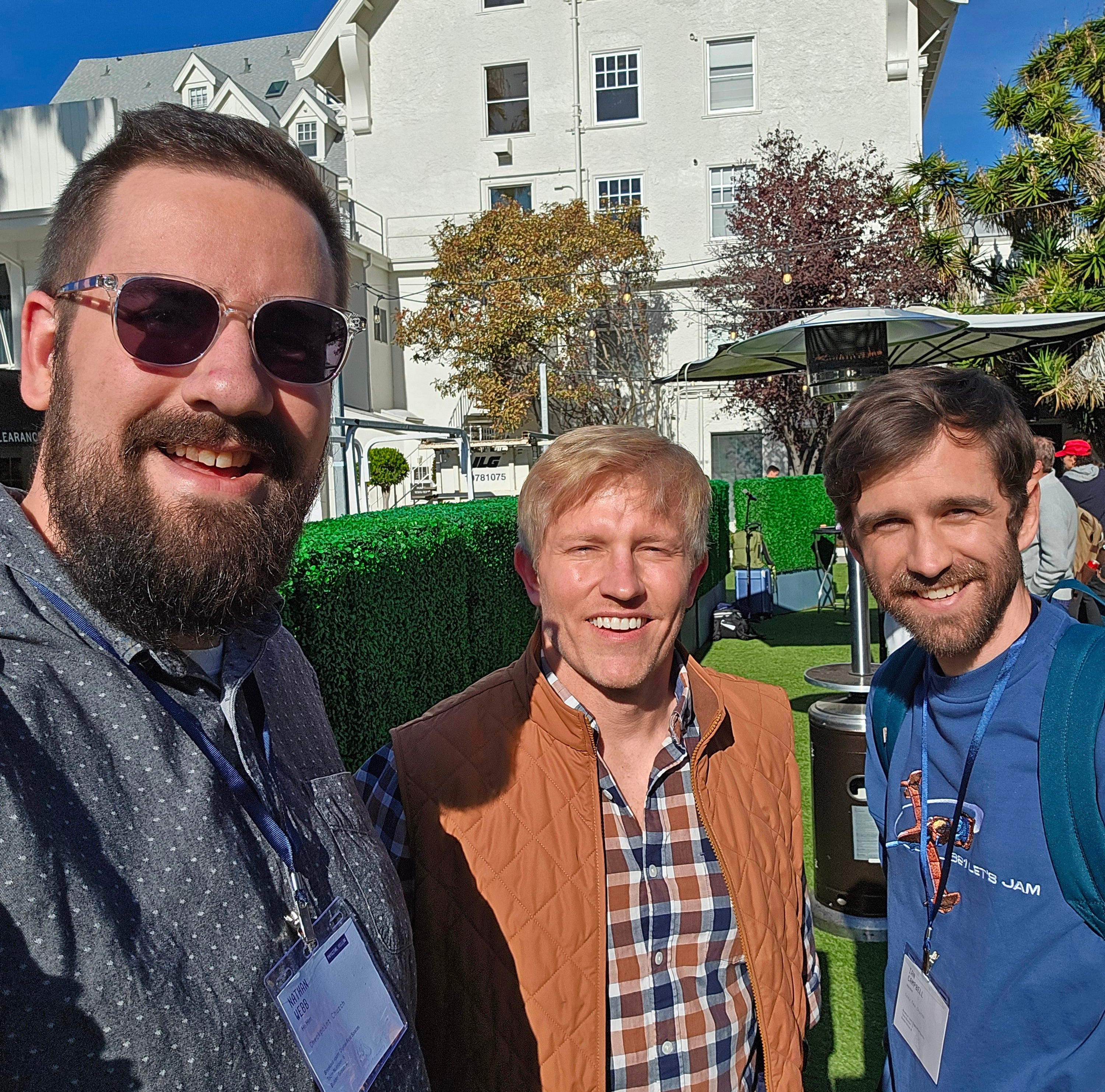
Over the course of our time together, I had the privilege of hosting the digital-first track. Along with Jeremy Steele and Ryan Dunn, the three of us hosted a conversation that was all too short but nonetheless excellent, with some folks who were curious about digital-first ministries and how they might be able to investigate that.
On the final day, I was able to present some of the highlights of the conversation we had in that room.
There and Back Again
I actually started our conversation by talking about the hard question I was asked when I first started Checkpoint:
What is the ecclesiology of your church?1
In other words, what makes Checkpoint Church actually a church? That led to an interesting conversation in the room — after we got past the shock and awe that I was asked that question at all. I don’t think anybody’s ever really had to consider that question too hard.
There was a push and pull about this being the right question for us to be asking. Not only because of the ecclesiology of what we are being called out from, but also the back half of ecclesiology: what are we being sent out to? Where are we being sent after we’re brought into community?
That was an interesting thought process. Have we done the full work — even in my own work — of step two of ecclesiology?
Not only where are we going. When we find people, where are we sending them next? How are we sending people? In what way are we sending them?
That was a curious thought.
With Great Reach Comes Great Accountability
One thing that surprised me was how much the room wanted to name what sets mainline digital-first ministers apart.
From our conversations in the room, we discerned an interesting opportunity in digital-first ministries: accountability from institutions in our online reach.
In a world of public theologians, algorithmic clickbait, and attention-driven economies, digital ministries give us the opportunity to be more than off-the-cuff. Instead, we can build accountable structures behind the people out in the digital mission field—sharing messages that are well-supported and not just haphazard ramblings or ideologies.
That was something the room noticed and wanted to draw out, especially in the social media era we’re in right now.
Digital-First Is a Mission Field
Even in a room of people who were curious about digital-first, I felt a light bulb turn on. I was able to phrase what digital-first ministry is: a mission field. A work that we’re going to.
This remains the single biggest hurdle for us as those trained in traditional church institutions. Digital-first ministry is not a project or a restructuring of something that already exists.
It’s not a transition from the traditional brick-and-mortar church to a Facebook livestream to building your online hub in a Facebook group or whatever. It’s more than that.
Digital-first ministry isn’t just digital ministry. It isn’t just the digital outreach of an existing church. Digital-first ministry, to me, is literally defining and describing the mission field we’re impacting and reaching.
I thought that was a beneficial thing for us to highlight. (If you need the 101 version, start with What Even Is Digital-First Ministry?)
Those are three insights. There were plenty more drawn out from this conversation, some of which I’ll be hosting a conversation about in the coming months with the The Digital Cooperative Parish. I’m sure many more will be coming out from the Phygital Fellows, too.
Long story short: this has been a nonstop topic for us since I was first asked. Our most honest answer right now is that Discord is our building — it’s where we gather. The actual ekklesia of what we’re doing, though, is found in the neo-monastic approach to togetherness we’ve discovered as digital natives: sharing in one another’s lives online, caring for one another, and holding one another in grace and sacrament.
If you’re curious to learn more, I’d love to write a full article on it. Let me know in the comments.